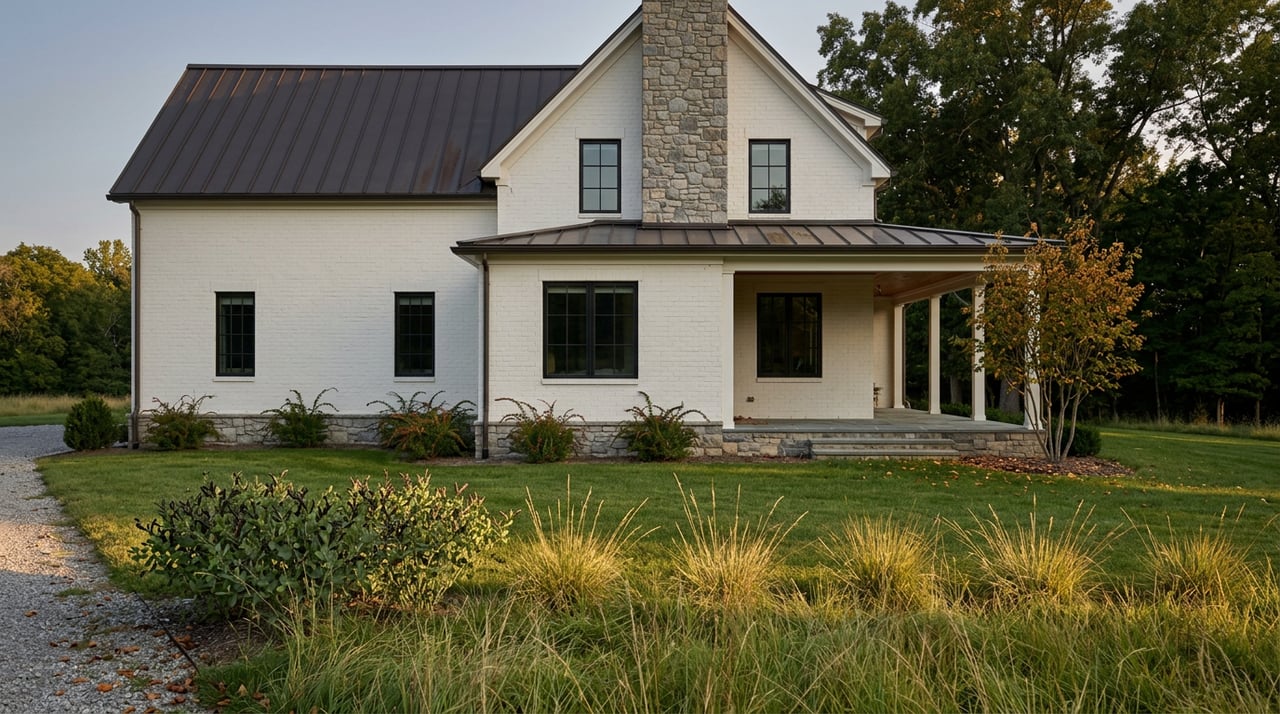
Two properties came up for sale in Arrington within weeks of each other this year. One was a 6.22-acre wooded tract off Paw Paw Springs Road, priced like the rest of the area's raw acreage, with the seller disclosing upfront that as far as they knew, the land would not perc. The other was a 5.5-acre parcel at Arno Allisona Road and Bizzell Howell Lane, already carrying an approved five-bedroom septic site for the main house and a separate approved three-bedroom site for a second structure.
Same zip code. Same rolling countryside. One is buildable today. The other might not be buildable at all, no matter what a buyer is willing to pay for it.
That gap is the thing most acreage shoppers in Arrington miss. The listing price, the acreage count, even the gate and the clubhouse amenities in a planned community tell you almost nothing about whether you can actually put a house where you want one. In Williamson County, that answer comes from a hole in the ground.
What a Perc Test Actually Decides
A percolation test measures how fast water moves through soil at the depth where a septic drain field would sit. Too slow, and effluent pools instead of draining, which the county cannot permit. Too fast, and it reaches groundwater before it is treated, which the county also cannot permit. Steep slopes, shallow rock, or a high seasonal water table can fail a site before a shovel ever breaks ground for the house itself.
Because most of Arrington sits outside municipal sewer service, this test functions as the real utility hookup for a homesite, not a formality that happens after closing. If the soil under a parcel cannot support a conventional system, the property owner is either limited to an alternative engineered system, which costs more and takes longer to design and permit, or the site simply cannot be built on as intended.
That is why a passing perc test, not a survey or an appraisal, should be the contingency a buyer refuses to waive on raw Arrington acreage. A failed test after closing does not just cost money. It can leave a buyer holding land they cannot legally build a house on.
Why Williamson County's Rules Are Different, and Currently in Motion
Most online guides to septic permitting point buyers toward the Tennessee Department of Environment and Conservation, which reviews standard applications in about ten days and must complete review within 45. That timeline does not fully apply here. Williamson County is one of a handful of Tennessee counties, alongside places like Davidson, Knox, and Shelby, that runs its own on-site sewage program through its Department of Sewage Disposal Management rather than deferring entirely to the state process. The county writes its own setback tables, its own soil assessment methods, and its own subdivision review steps, layered on top of the state framework.
Those local rules have not been static. In March 2025, the county's Board of Health adopted amendments that, for the first time, authorized advanced treatment systems and subsurface drip disposal systems for lots where a conventional gravity system will not work, replacing a system that had previously required a special legal agreement for anything experimental. Those changes took effect July 1, 2025.
Barely a year later, the county reopened the conversation. A Board of Health public hearing held this past Tuesday, August 18, considered proposed amendments touching twelve separate sections of the sewage disposal regulations, including the same advanced treatment and drip disposal provisions adopted the year before. A separate Subsurface Sewage Disposal Systems Task Force had already spent January through March of this year studying whether the county's rules should go further than the state's baseline.
None of that means the ground under a specific Arrington lot is about to change. It means the framework a buyer's soil scientist or installer is quoting against right now is not settled, and a system designed under one set of provisions could face different requirements if a plat revision or a repair comes up down the road. For a buyer weighing whether to waive a contingency on the strength of a verbal assurance, that is worth knowing before signing anything.
What the Numbers Actually Look Like
Neither Williamson County nor the state publishes its own cost data for septic installation, so any number a buyer sees online is a national reference point, not a local quote. Here is the general range those reference points fall into for a typical single-family lot:
| Step | Typical Range | Note |
|---|---|---|
| Perc test / soil evaluation | $300 to $1,900 | Cheap relative to what it protects against |
| Conventional gravity system | $7,000 to $15,000 | Assumes soil passes without modification |
| Alternative system (mound, ATS, drip) | $12,000 to $25,000+ | Required when soil, slope, or water table rules out conventional |
| New well plus new septic, combined | $10,000 to $35,000 | Varies with depth, soil, and system type |
Septic cost has become genuinely contentious in Williamson County politics. A county commissioner's opinion column in the Williamson Herald last fall argued that the county's system requirements run far above the state's typical costs and pushed for a full regulatory reset. Independent reviewers who later fact-checked similar claims found some of the most dramatic cost figures circulating online could not be traced back to any county or state source and had to be walked back. The safest approach for a buyer is not to anchor on any single number, from either side of that argument, but to get a written quote from a licensed Williamson County installer before removing a contingency.
What Lot-Ready Actually Looks Like Right Now
The difference between raw acreage and a platted homesite in an established community is that someone has already absorbed the perc-test risk. Arrington Woods, a newer 90-acre community offering eleven lots of five acres or more, markets itself on having already identified multiple preliminary soil sites for septic across the property, along with existing access to power and city water. That is a meaningfully different proposition than a wooded tract where the seller cannot say either way.
The same logic applies to the county's established gated communities. Kings Chapel, spread across 700 acres with 350 or more acres of preserved green space and its own clubhouse and pool through the Club at Kings Chapel, carries a median sale price around $1,674,500 for its built homes. Fox Farms, the newest gated community in the corridor, is being built out now by Drees Homes and Partners in Building on homesites running roughly a half acre to 1.58 acres, priced from about $1.8 million to $2.9 million with delivery expected later this year. Hardeman Springs, built by Legend Homes on a larger acreage footprint, carries a median near $1,999,450. In the twelve months ending this spring, new construction sales across the corridor split fairly evenly across price tiers, from entry-level product in Fiddler's Glen and High Park Hill under $1 million up through the $2 million-plus custom tier in Kings Chapel and Hardeman Springs, with High Park Hill's $1.2 million to $1.4 million range seeing the most active building and the shortest timelines.
Every one of those communities cleared its soil hurdle before lots ever hit the market. That work is part of what a buyer is paying for in the price difference between a platted homesite and a raw parcel advertised at a similar per-acre rate.
Before You Waive a Perc Contingency in Arrington
- Make any offer on unplatted acreage contingent on a passing perc test, not just a satisfactory inspection
- Ask the seller directly whether a soil evaluation or perc test has already been performed, and get the results in writing
- If a septic site has already been approved, confirm the approved bedroom count matches your building plans, since the county's approval is tied to that number
- Verify whether the property sits under the March 2025 provisions or an older set of rules, especially if you are considering an alternative system
- Call the Williamson County Department of Sewage Disposal Management directly before removing any contingency rather than relying on a downloaded copy of the regulations or a general online guide
- If buying in a platted community, ask the builder or developer to show you the soil map for your specific lot, not just the community as a whole
Common Questions From Arrington Land Buyers
Does a gated community guarantee my lot will pass a perc test? It means the developer has already done soil work at the community level, which is genuinely valuable. It does not mean every individual lot is identical. Ask for the soil map or approved septic site specific to the lot you are buying, not a general statement about the neighborhood.
How long does septic permit review actually take in Williamson County? The state's standard timeline is about ten days with a 45-day outer limit, but that applies to a straightforward system application. Subdividing raw land into a buildable lot adds a multi-phase plat review through the county's own department, which can take considerably longer and should be built into any construction timeline.
What happens if a perc test fails after I am already under contract? That is exactly why the contingency matters. A properly written perc contingency lets a buyer walk away or renegotiate if the soil does not support the system needed, rather than closing on land that cannot be built on as planned.
Land and homesite purchases in a market like Arrington reward buyers who ask about the ground before they ask about the gate. If you are evaluating acreage, a custom homesite, or a lot in one of the corridor's new communities, the LCT Team can walk the specific parcel with you, help you understand what has and has not been cleared, and coordinate with builders who already know this ground. Contact the LCT Team to schedule a private consultation.