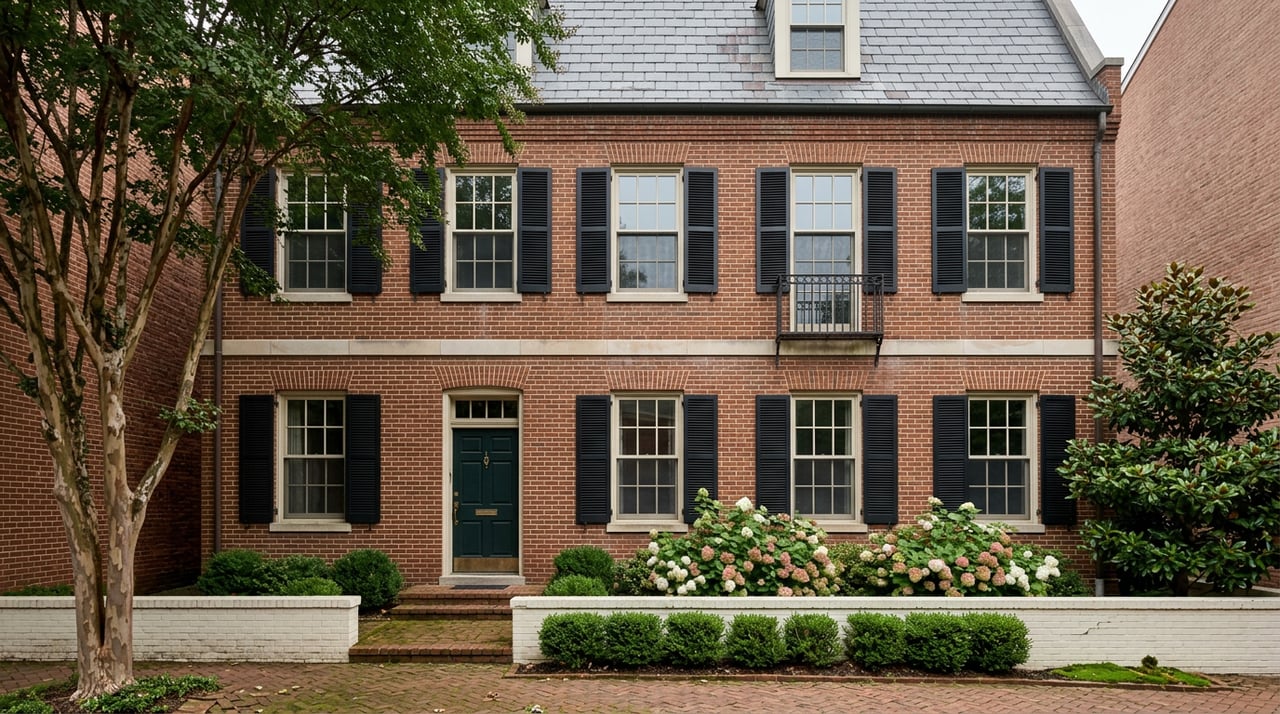
The call to a Franklin painting contractor usually starts the same way: a letter arrived from the Historic Zoning Commission, and the color the homeowner already chose "does not appear in the approved Certificate of Appropriateness." The project stops. Nobody picks up a brush until the paperwork catches up with the plan.
That single sentence explains more about selling a historic Franklin home than any market report will. Most sellers assume a pre-listing renovation runs on a contractor's calendar: pick finishes, sign a contract, schedule the crew, list the house. Inside Franklin's Historic Preservation Overlay, that assumption is wrong. The real gate isn't your painter's availability or your budget. It's whether your project makes it onto the agenda of a commission that meets once a month, and what happens if it doesn't clear on the first try.
What Actually Triggers a Review
The Historic Preservation Overlay covers Franklin's downtown core, and inside it, the Historic Zoning Commission has authority over far more than you'd guess from the outside. A Certificate of Appropriateness is required for additions and porches, for any repainting of a facade that has never been painted, for fences and driveways, for mechanical equipment and rooftop features, and for interior work if it changes what the building shows to the street. A brick or stone facade in its original condition can't be painted on the owner's judgment alone, no matter how good the color looks on the sample chip.
The commission itself is nine citizen appointees covering architecture, historic preservation, the planning commission, and the general community, reviewing every application against the city's Historic District Design Guidelines and the Secretary of the Interior's Standards for Rehabilitation. Those guidelines don't hand out a list of three pre-approved beiges. They ask you to justify why a color, material, or design choice fits the building's period and the block it sits on. That's a design conversation, not a checkbox, and design conversations take longer than paint estimates.
The Calendar Is the Real Deadline
Here's the mechanism sellers miss. The HZC meets monthly, and applications have to be submitted at least five working days ahead of that meeting to make the agenda. If the commission approves your request outright, you're clear to start. If it comes back with conditions or a denial, you don't get a second shot next week. You revise and resubmit for the following month's meeting. One rejected color swatch can cost you thirty days flat.
Add up the realistic path from application to finished exterior work and you're typically looking at 60 to 90 days before a repaint or facade change is done, not counting any month lost to a resubmission. That's the timeline for paint alone. Additions, new porches, or site-wide alterations move through the same monthly cycle with more documentation attached.
Now set that against how fast the rest of Franklin is actually moving. Over the trailing three months through June 2026, Franklin homes sold at a median of $864,000, up 5.3 percent year over year, with a median of 48 days on market. Separate tracking of live listings and closings in August 2026 shows a market leaning toward sellers without being overheated: roughly 59 active listings against 30 homes already pending, and a median asking price close enough to recent closed prices that buyers aren't finding much room to negotiate. Fresh, well-priced listings elsewhere in the city are going under contract in about a week.
Put those two clocks side by side and the mismatch is the whole story. A homeowner who waits until they're ready to list before starting an exterior refresh, assuming a few weeks of contractor time, can find themselves still waiting on HZC approval while comparable non-historic homes down the street have already closed.
| Step | Non-historic Franklin home | Historic Preservation Overlay home |
|---|---|---|
| Facade color change | Owner picks color, schedules crew | COA application filed at least 5 business days before the HZC's monthly meeting |
| Approval | Not required | HZC meets monthly; realistic approval-to-paint window runs 60 to 90 days |
| If the plan needs revision | Contractor adjusts on site | Application returns with conditions, resubmitted for the following month |
| Market pace during that window | Comparable homes selling in a median of 48 days (trailing 3 months through June 2026) | Same market, same clock, running while the paint waits |
What This Means If You're Selling, Not Just Painting
If you're the seller, the practical move is to start the COA conversation months before you plan to list, not after your agent tells you the exterior needs work. Reach out to Franklin's preservation staff early. An informal Design Review Committee meeting ahead of a formal application gives you a read on whether your color or material choice will clear on the first pass, which is the single biggest variable in whether you're looking at 60 days or 120.
If you're the buyer, the same calendar matters in reverse. Ask whether recent exterior work on the home you're touring went through the COA process or happened without it. Unpermitted alterations in the historic overlay can surface during a title search or an appraisal and complicate both resale and insurance down the line. A seller who can produce the Certificate of Appropriateness alongside standard permits for roof, HVAC, electrical, and plumbing work is handing you a cleaner file, and a faster path to your own closing.
If the House Predates 1978, Add Another Layer
Much of downtown Franklin's historic stock was built well before 1978, which means any renovation disturbing more than 20 square feet of exterior paint or 6 square feet of interior paint falls under the EPA's Renovation, Repair, and Painting rule. Contractors have to be EPA Lead-Safe Certified, work inside containment barriers, and use wet sanding and HEPA-vacuum cleanup instead of standard dry sanding. If the construction date isn't documented, expect a paint-chip test before work starts. This runs parallel to the HZC review, not instead of it, so a pre-1978 facade project is managing two separate compliance tracks at once.
Financing Doesn't Skip the Line Either
Buyers planning to fund a renovation through an FHA 203(k) loan or Fannie Mae's HomeStyle Renovation program should budget for the same stacking effect. Both wrap purchase and improvement costs into a single loan, but both also require contractor documentation, an appraisal based on the completed project, and draw inspections as work progresses. None of that moves faster because the house happens to be inside a historic district. If anything, the COA requirement becomes one more document your lender's file is waiting on before the next draw releases.
The Boundary Itself Isn't Fixed
Worth knowing before you buy near the edge of the overlay: these district lines are not permanent. In April 2026, Franklin's Board of Mayor and Aldermen voted 5-1 to advance a rezoning request that would shift the boundary of the Hillside Hillcrest Overlay near Roper's Knob, a Civil War-era signal station listed on the National Register of Historic Places since 2000. The lone dissenting vote came from a board member concerned that moving the line could open protected land to development. The commission's own preliminary recommendation only supported the shift on the condition that future construction not increase visibility from Franklin Road or the historic resource itself. If you're evaluating a property near any overlay edge, confirm the current boundary by parcel, not by what a listing sheet assumed a year ago.
A Few Questions Worth Asking Before You List or Buy
Does every home inside downtown Franklin need HZC approval before exterior work starts? If the property sits inside the Historic Preservation Overlay, yes, for anything that changes the exterior appearance, from a new fence to a full addition. Minor alterations that don't substantially change how the building looks from the street can sometimes be handled through an Administrative Certificate of Appropriateness, which the Preservation Planner can approve without a full commission hearing.
What happens if someone alters a historic home without going through the process? Work done without an approved Certificate of Appropriateness can create problems at resale, since a buyer's title search or a future permit application can surface it later. It can also complicate insurance coverage tied to the property's historic designation.
Does any of this affect a buyer's closing timeline, not just a seller's pre-listing work? It can, particularly if the purchase includes renovation financing like a 203(k) loan. The appraisal, draw inspection, and COA approval steps run on separate schedules, and a lender's file typically won't move until all three are in place.
Can the historic overlay boundary change after I've already bought? Yes. Boundary and zoning changes go through the Historic Zoning Commission and the Board of Mayor and Aldermen, as the current Hillside Hillcrest Overlay discussion shows. It's worth checking current district maps rather than relying on what a previous owner or listing described.
Buying or selling inside Franklin's historic core rewards patience and planning in equal measure, and the difference between a smooth listing and a stalled one usually comes down to who started the paperwork first. The LCT Team works with builders, preservation staff, and Williamson County's fastest-moving buyers every week. Contact the LCT Team to schedule a private consultation before your next exterior project or historic-district purchase.