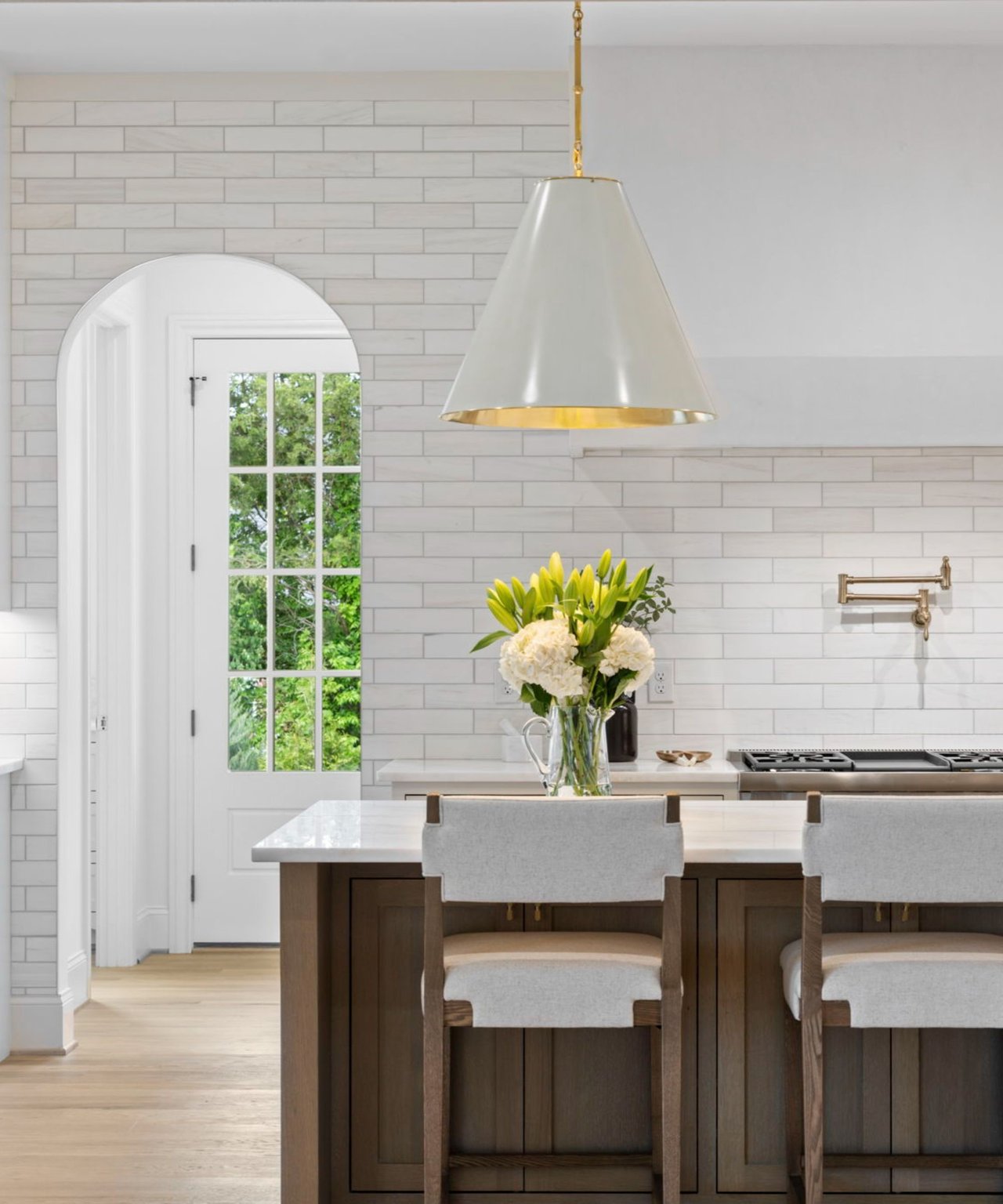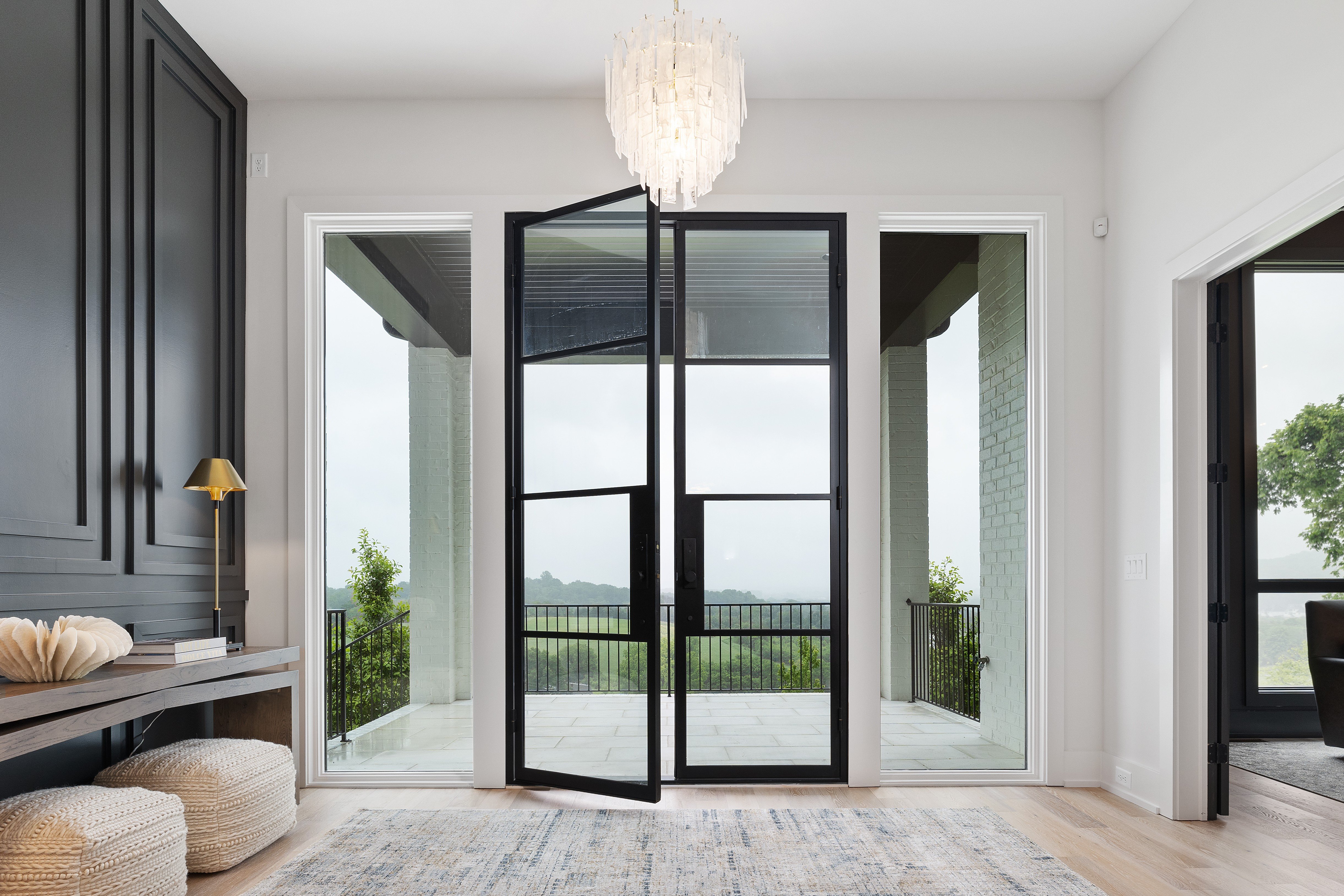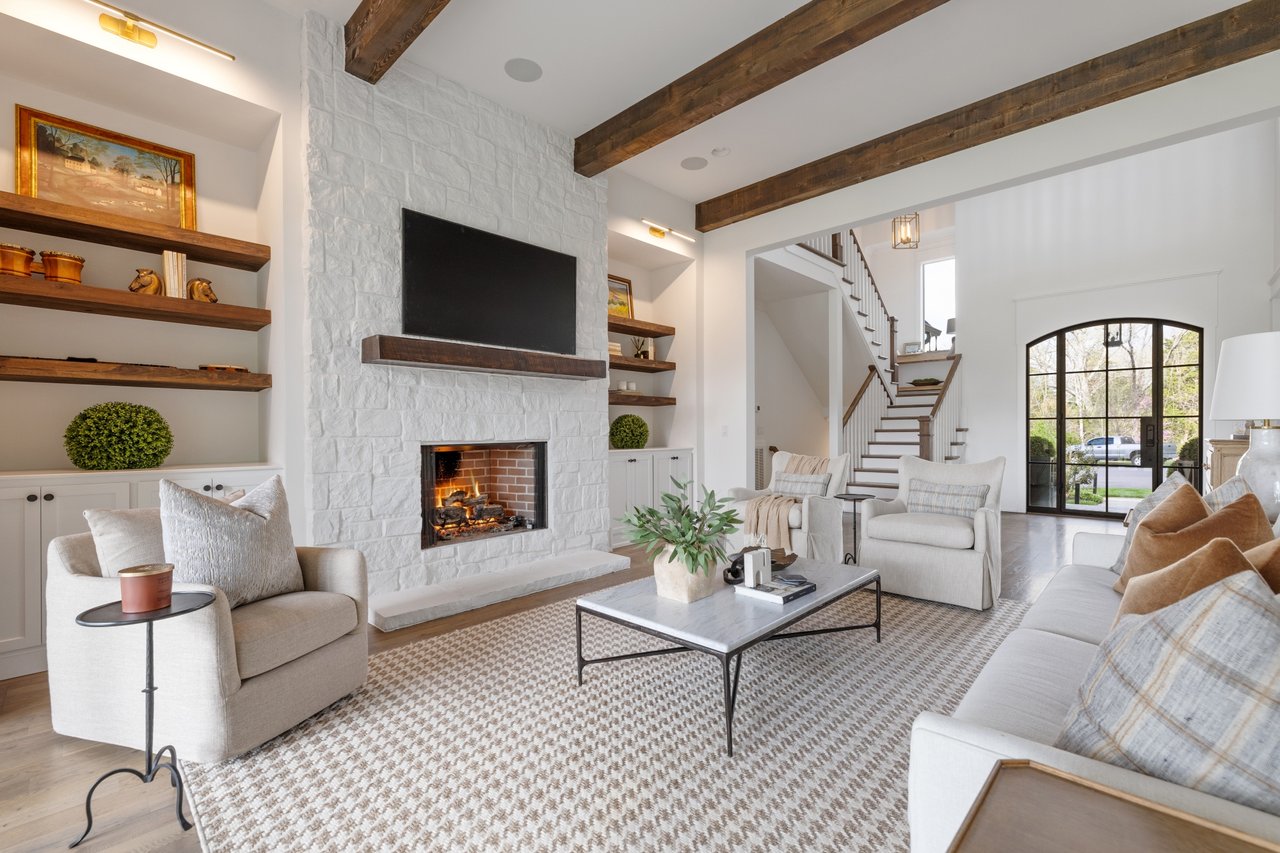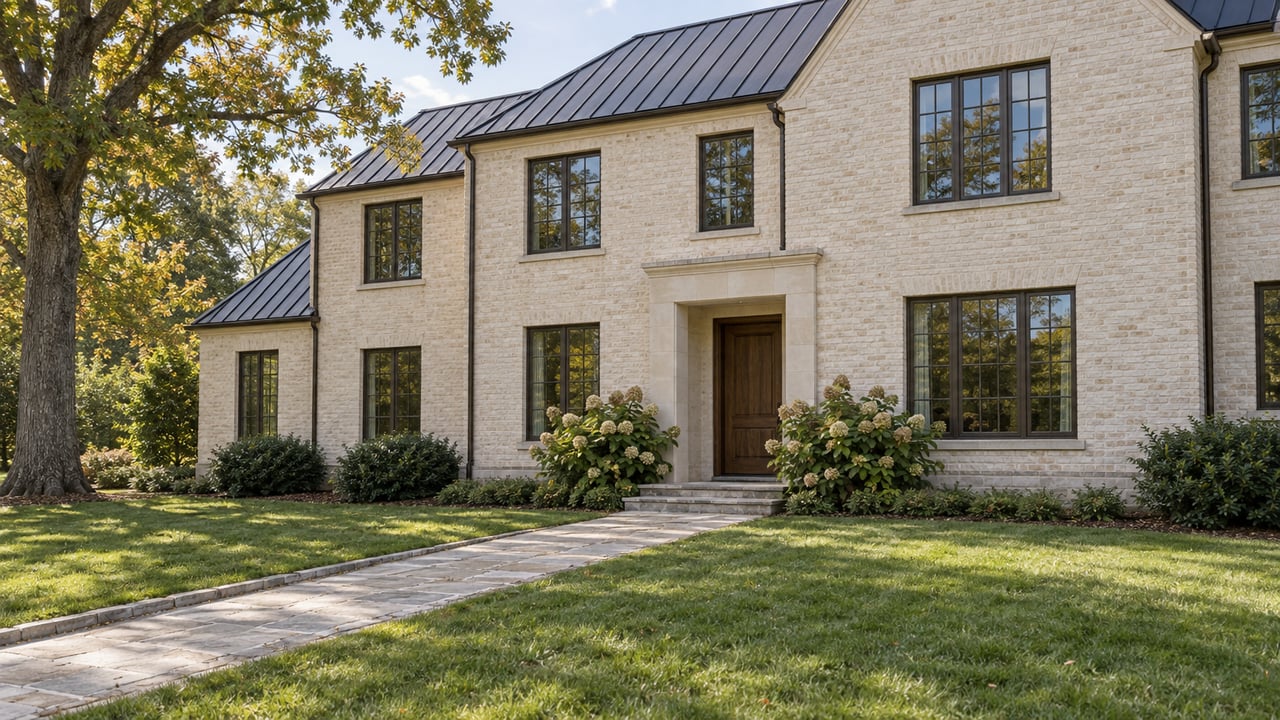
A production builder can put up two nearly identical floor plans on the same street in Spring Hill's Canterbury community, and the buyers who close on those homes can end up with two different county tax bills, two different school systems, and eventually two different resale conversations. The reason has nothing to do with the builder, the finishes, or the lot. It's the Williamson-Maury county line, which runs through the middle of Spring Hill and shows up on no fence, no street sign, and no listing photo.
If you've been comparing Spring Hill to Franklin or Brentwood using the city-wide median price you saw on a major portal, somewhere in the $520,000s to $540,000s through the first half of 2026, that number is telling you less than it appears to. It's the arithmetic middle of two markets that don't behave the same way, don't price the same way, and in a slower 2026 market, don't tolerate the same mistakes.
One City, Two Counties, No Marker at the Border
Williamson County holds the northern half of Spring Hill. Maury County holds the southern half. Both halves carry the same city services, the same "Spring Hill, TN" mailing address, and the same municipal government. What they don't share is a county government, and that single fact touches taxes, school zoning, and eventually the price a buyer is willing to pay.
What the Blended Median Erases
Realtracs MLS data covering the trailing 12 months into May 2026 shows the two halves of Spring Hill pricing at meaningfully different levels. Homes on the Williamson County side carried a median sale price of $715,000. Homes on the Maury County side carried a median of $490,000. That's a 46 percent gap, and it isn't the product of a handful of outlier sales skewing one side. Of 1,085 total closings in that window, 509 happened in Williamson County and 576 happened in Maury County, meaning both halves are doing comparable, real volume.
Layer in construction vintage and the picture gets more specific still. City-wide, new construction carried a median of $659,484 against $536,000 for resale in the same period, a roughly $123,000 gap on its own. Put the two variables together and a single blended headline number is hiding at least three separate questions a buyer needs to answer before comparing two listings: which county, which construction vintage, and which specific pocket of either county.
Here's how that plays out in the communities buyers are actually shopping right now.
| Side of the line | Representative communities | Builders on record | Recent new-construction price point |
|---|---|---|---|
| Williamson County (north) | August Park; Saddlewalk and The Preserve at June Lake; Wilkerson Place; Bluebird Hollow; Maebry | Toll Brothers and John Maher Homes at August Park; Signature Homes active in the June Lake community | August Park pricing from the upper $700s into the low $1 millions; June Lake closings of $999,999 and $859,584 in January 2026 |
| Maury County (south) | Harvest Point; Chapmans Retreat; Brandon Woods; Barton Hills; Arbor Valley; Hardins Landing; Trace Side; Sharp Manor; Cedar Brooke | Regent Homes townhomes at Harvest Point | Harvest Point closings ranging from $397,900 to $435,000 in January 2026 |
Established resale rounds out both sides too, with Autumn Ridge and Cherry Grove on the Williamson side and Wyngate Estates on the Maury side. None of these communities is competing directly with the others on price. They're serving different buyers with different budgets, and a single blended median flattens all of that into one number that describes none of them accurately.
The Tax Bill Doesn't Read the Zip Code
The City of Spring Hill sets one municipal tax rate, currently $0.7390 per $100 of assessed value, and that rate applies identically whether a parcel sits in Williamson or Maury County. The county portion is where the split shows up. Williamson County's rate is $1.3000 per $100. Maury County's is $1.9100. Combined with the city rate, that puts the total at $2.0390 on the Williamson side and $2.6490 on the Maury side, a difference of roughly $915 a year on a $600,000 home.
That detail cuts against the easy version of the story. The Maury side is cheaper to buy into by a wide margin, but it's taxed at a higher rate per dollar of assessed value than the Williamson side. The $225,000 gap in median purchase price still dwarfs an $915 annual tax difference, so the Maury side remains the lower-cost option overall. But the two effects don't stack in the same direction, and a buyer running a monthly payment estimate off a single blended tax assumption will get the number wrong on whichever side they're actually buying into.
There's a second wrinkle worth knowing before anyone treats today's tax gap as fixed.
Tennessee law requires a county that completes a reassessment to roll its rate back to a revenue-neutral certified rate, so rising property values alone cannot increase a county's total tax collections. That certified rate can still be raised above the neutral level, but only by a vote that has to be advertised publicly as a tax increase.
Williamson County moved through its reassessment in the 2024-25 cycle. Maury County's turn falls in the cycle after that. The two counties are not resetting their rates on the same calendar, which means the $0.61 gap in the county rate isn't a permanent structural feature of Spring Hill. It's a snapshot of where each county happens to sit in its own four-year clock. The next time either county reassesses, that gap can narrow or widen, and a buyer comparing bills today is comparing figures pinned to two different points in time.
School Zoning Draws a Second Line on Top of the First
The county boundary and the school boundary aren't always identical, but they track closely enough that address, not neighborhood name, is the only reliable check. On the Williamson side, feeder patterns run through schools including Bethesda Elementary and Allendale Elementary into Spring Station Middle, continuing to Summit High or Independence High. On the Maury side, Marvin Wright Elementary feeds into Spring Hill Middle and Spring Hill High, while Battle Creek Elementary feeds into Battle Creek Middle and Battle Creek High.
Because the county line cuts through mixed communities like Canterbury, two homes on the same cul-de-sac can zone into entirely different school systems. A neighborhood name alone won't tell a buyer which one they're getting.
The Plant Complicates the "Williamson Side Always Wins" Read
It would be easy to assume the Williamson side simply wins on every measure and the Maury side is the consolation option. The employment picture in Spring Hill argues against that framing. The GM Spring Hill Assembly Plant and its Ultium Cells battery facility, a joint venture between GM and LG Energy Solution employing roughly 1,300 workers, sit along Highway 31 near the Maury County line. For anyone commuting to the plant or its supplier network, the shortest drive typically runs through Maury-side communities. That turns the decision into a genuine trade-off between school zoning on one side and commute time to one of Middle Tennessee's largest employers on the other, rather than a simple upgrade-or-settle choice.
Why the Split Matters More in a Slower Market
As of June 2026, Spring Hill's city-wide median list price sat near $539,000 with a median of roughly 53 days on market. Realtracs data for the month ending mid-July 2026 showed an average sale price near $440,000, with days on market up more than 20 percent compared to the prior comparable window, and homes generally closing a couple of percent below list.
In a market moving at that pace, benchmarking against a blended city median works against both sides. A seller on the Williamson side who prices against the city-wide number is likely underpricing relative to what August Park or June Lake buyers are actually paying. A seller on the Maury side using that same blended benchmark is likely overpricing relative to what Harvest Point or Brandon Woods buyers are willing to spend. Overpriced listings on either side pick up days on market quickly right now, and in a slower year, time on market is one of the most expensive variables a seller can control.
A Few Questions Worth Asking Before You Compare Listings
How do I confirm which county a specific Spring Hill address falls in? Pull the parcel record from the Williamson County or Maury County property assessor rather than relying on the mailing address or the neighborhood name. Communities including Canterbury contain parcels on both sides of the line.
Does the tax rate gap between the two counties stay fixed year to year? No. Williamson and Maury complete their four-year reassessment cycles on different schedules, and each reassessment triggers a revenue-neutral rate adjustment under state law. The size of the gap shifts depending on where each county sits in its own cycle.
Is the Maury side simply the budget option? The purchase price runs lower there by a wide margin, but the county tax rate runs higher per $100 of assessed value. The two effects move in opposite directions and don't cancel out. They narrow the total cost-of-ownership gap slightly without closing it.
The parcel record settles the question that the mailing address never will. Before writing an offer or setting a list price on a Spring Hill home, confirm the county, the school zone, and where that specific property sits relative to its own comparable pocket, not the city-wide median.
If you're weighing a Spring Hill purchase or sale and want a parcel-specific read on which side of the line a property sits, what that means for taxes and schools, and how it should be priced against the right comparables, The LCT Team can walk through the specifics with you.